
BLOG
Oral Peptides
ago
Oral Peptides: What Works, What Doesn’t, and How to Choose
Peptides have become one of the most exciting developments in functional and metabolic medicine, but the route of administration makes all the difference . Oral peptides, in particular, have gained significant attention for their potential to support metabolism, tissue repair, and skin health—all without needles. But can they actually survive digestion and deliver results?
What Are Oral Peptides?
Peptides are short chains of amino acids that act as powerful biological signaling molecules, influencing metabolism, inflammation, and tissue repair throughout the body . Unlike proteins, which are long chains, peptides are small enough to be highly targeted in their effects.
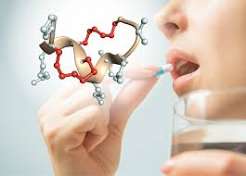
Oral peptides are simply peptide supplements or medications taken by mouth. While injectable peptides—such as GLP-1 receptor agonists for diabetes and weight management—deliver consistent systemic exposure, oral peptides must survive the digestive tract and be absorbed into circulation, making their effectiveness highly dependent on formulation .
The Challenge: Why Oral Peptides Often Fail
The gastrointestinal system is designed to break down proteins and peptides into amino acids. This presents two core challenges for oral peptide delivery: degradation and absorption .
Enzymatic Degradation
Once a peptide enters the stomach, it faces a gauntlet of proteolytic enzymes designed to dismantle it. Pepsin in the stomach and pancreatic proteases in the small intestine rapidly break peptide bonds, potentially destroying the peptide’s biological activity before it can ever reach circulation .
Poor Intestinal Absorption
Even if a peptide survives digestion, it must cross the intestinal membrane. Peptides are typically large, hydrophilic molecules that don’t easily pass through the lipophilic intestinal epithelium. Without a natural transporter, most standard oral peptide capsules deliver minimal systemic exposure .
Hepatic Metabolism
After absorption, peptides face a third barrier: first-pass metabolism in the liver, which can further reduce bioavailability . One review identified insufficient evidence regarding hepatic metabolism as a major research gap, pointing to the need for more in vitro studies to clarify this impact .
The result? Most standard oral peptide formulations deliver disappointingly low bioavailability. For larger peptides like GLP-1 analogs, achieving comparable effects to injectable forms may require up to seven times higher dosing .
What Makes an Effective Oral Peptide?
Not all oral peptides are created equal. The key differentiator between effective and ineffective formulations lies in delivery technology .
Liposomal Delivery Systems
Liposomal delivery has emerged as a promising approach for protecting peptides and enhancing absorption. High-quality liposomal formulations can:
- Shield peptides from enzymatic breakdown in the GI tract
- Facilitate transport across mucosal membranes
- Enable faster systemic absorption
However, not all liposomal products are equivalent. Effective formulations require pharmaceutical-grade ingredients and precise particle sizing. Smaller liposomes—described as “transparent” due to their nanoscale size—are more readily absorbed, while larger, lower-quality formulations may degrade before reaching circulation .
Advanced Delivery Systems
Beyond liposomes, several other strategies are being developed to overcome oral peptide barriers:
- Permeation enhancers such as sodium caprate and medium-chain fatty acids that temporarily open tight junctions between intestinal cells
- Chemical modifications including lipidation, peptide cyclization, and PEGylation to improve stability and membrane permeability
- Polymer nanoparticles and hydrogels that protect peptides during GI transit and enable targeted release
For instance, recent advancements in pH-responsive hydrogels and cell-penetrating peptide strategies are showing promise for oral insulin delivery in diabetes treatment .
Oral Peptides with Research Support
Collagen Peptides
Among oral peptides, collagen has the strongest clinical evidence. A 2026 systematic review and meta-analysis of 19 randomized controlled trials involving 1,341 participants found that oral collagen peptide supplements significantly improved skin hydration and luminance .
Multiple studies have demonstrated efficacy for skin health with doses ranging from 1 gram to 10 grams daily over periods of 8 to 16 weeks. Improvements were observed in skin hydration, elasticity, wrinkles, and overall skin appearance .
For joint health, native Type II collagen, sourced from bovine, porcine, poultry, or fish, works through a mechanism called “oral tolerance.” This immune-mediated response reduces autoimmune reactions against articular cartilage, potentially improving symptoms in osteoarthritis .
BPC-157
BPC-157 is a peptide originally derived from human gastric juice that has shown consistently positive healing effects in animal models for various types of injuries .
An acid-stable oral form (as a stable arginate salt) is available, and rodent studies have demonstrated behavioral and healing outcomes after oral dosing. However, no published human pharmacokinetic study has established a precise oral bioavailability percentage for BPC-157—whether intact BPC-157 reaches systemic circulation in humans at meaningful concentrations remains unconfirmed .
MK-677
MK-677 (ibutamoren) is not a true peptide but a peptidomimetic—a small molecule that mimics a peptide’s receptor action. Because it survives oral digestion, it has measurable oral bioavailability in humans .
Unlike most oral peptides, MK-677 has multiple human RCTs. Studies have shown reliable IGF-1 elevation of roughly 40% to 70% above baseline at doses of 10 mg to 25 mg daily .
GLP-1 Receptor Agonists
Oral semaglutide, a GLP-1 receptor agonist, is one of the few FDA-approved therapeutic peptides available in oral form for diabetes management. Its delivery uses an absorption enhancer (sodium N-[8-(2-hydroxybenzoyl) amino]caprylate) to facilitate intestinal uptake, demonstrating that advanced formulation strategies can make oral peptide therapeutics viable .
Oral vs. Injectable: What to Consider
Injectable peptides remain more pharmacokinetically efficient. For most peptides, subcutaneous injection achieves far higher systemic bioavailability by bypassing gastric proteolysis .
However, oral peptides offer distinct advantages:
- Patient preference: Needle-free delivery is a key driver for choosing the oral route. For therapeutics requiring frequent dosing—where half-lives are a half-hour to a couple of hours—injections can become burdensome .
- Safety profile: Oral peptides carry reduced risk of injection-site reactions, lower concerns around sterility and contamination, and fewer hypersensitivity responses .
- Adherence: Patient preference and adherence are major drivers of adoption, particularly for therapies requiring frequent dosing .
For regenerative peptides with short half-lives that might require daily or twice-daily administration, the oral option becomes increasingly attractive despite potentially lower bioavailability .
Safety and Quality Considerations
When considering oral peptides, quality matters enormously. Here’s what to look for:
Manufacturer Quality
Low-quality manufacturing can introduce contaminants such as lipopolysaccharide (LPS)—a highly inflammatory compound from bacterial cell walls . A credible certificate of analysis should confirm:
- HPLC purity above 98%
- Mass spectrometry confirmation of molecular weight
- Absence of endotoxin (LAL test)
- Heavy metal screening
Verify the COA was issued by an independent third-party lab, not the vendor’s in-house lab, and check that the lot number matches the product label .
Regulatory Status
In the United States, most research peptides—including BPC-157 and TB-500 analogs—are sold legally as research chemicals for laboratory use, not for human consumption. Therapeutic peptides like semaglutide and tirzepatide require a prescription, as they are regulated medications that should be used under medical supervision . Collagen peptides and copper peptides in topical skincare are available over-the-counter.
Kidney Function Considerations
Peptides that reach circulation are eventually broken down by proteolytic enzymes into constituent amino acids, which the body can use for other purposes. For individuals with compromised kidney function, consultation with a healthcare provider is advisable before starting any peptide therapy .
Final Verdict
Oral peptides represent an exciting frontier in therapeutic and wellness applications, but their effectiveness depends heavily on formulation quality and delivery technology.
What works best:
- Collagen peptides have the strongest human evidence, with consistent improvements in skin hydration and elasticity demonstrated across multiple RCTs .
- Therapeutic oral peptides like semaglutide show that advanced delivery systems can make oral peptide therapy viable, but they require prescriptions .
- High-quality liposomal formulations can protect peptides from degradation and enhance absorption—if they use pharmaceutical-grade ingredients and proper particle sizing .
Proceed with caution:
- Research peptides like BPC-157 lack human pharmacokinetic data confirming oral bioavailability and are typically sold only for laboratory use .
- Low-cost, unverified products may have poor bioavailability or quality concerns .
Rating: 4.2/5 for collagen peptides; 3.5/5 for other oral peptide supplements
Quick Recommendation
- Choose oral peptides if you want: Needle-free convenience for skin health support (collagen) or are working with a licensed provider for prescribed therapeutic options.
- Skip oral peptides if you need: Maximum systemic bioavailability for therapeutic applications where injectable forms are proven more effective, or if you’re considering unregulated research chemicals not intended for human consumption.

 Português do Brasil
  English